Safeguarding the Architectural Treasures of Saintonge
RTS ASSOC ROUTE HISTORIQUE TRESORS SAINTONGE is an officially accredited non-profit heritage union dedicated to inventorying, protecting, and revitalizing rural Romanesque monuments and medieval castles across the Saintonge territory. Open to all citizens, students, and conservation enthusiasts without commercial barrier, our collective coordinates civic field stewardship, public educational circuits, and inter-site cultural preservation across partner municipalities.
Rooted at the historic Château de Le Douhet in Charente-Maritime, our independent association unites volunteer stewards, academic historians, local artisans, and municipal representatives under a common civic charter. We operate entirely free from commercial transactions, ensuring that regional architectural memory remains an open public asset accessible to every generation.
Our Public Interest Mandate in the Saintonge Territory
The fundamental mission of RTS ASSOC ROUTE HISTORIQUE TRESORS SAINTONGE is to preserve, study, and promote the extraordinary architectural and Romanesque heritage of the Saintonge territory for the direct benefit of the general public. As an officially registered non-profit association under the French law of 1901, our organization operates strictly in the public interest, completely free from commercial objectives, private profit distribution, or commercial product sales. We unite rural municipalities, historical monument custodians, local artisans, volunteer conservationists, and academic researchers to safeguard endangered medieval abbeys, feudal castles, ancient stone bridges, and Romanesque parish sanctuaries. Through systematic field documentation, collaborative public workshops, free educational curricula for regional schools, coordinated eco-heritage circuits, and non-invasive restorative maintenance, we ensure that the architectural memory, craftsmanship, and cultural identity of Saintonge remain permanently protected, accessible, and vibrant for present and future generations.
How Our Non-Profit Organization Is Funded
Operating under the strict legal framework of Association Loi 1901, RTS ASSOC ROUTE HISTORIQUE TRESORS SAINTONGE functions exclusively for civic benefit. We do not sell commercial products, merchandise, admission packages, or proprietary services.
1. Territorial Public Subsidies
Our field documentation surveys, ecological clearance days, and public signage projects receive partial funding through competitive institutional grants awarded by the Department of Charente-Maritime, the Nouvelle-Aquitaine Regional Cultural Directorate (DRAC), and affiliated communal syndicates. These public subsidies are audited annually and earmarked strictly for non-commercial monument preservation. Every euro received from public institutions is accounted for in open financial registers verified by statutory auditors.
Audited under French public accounting standards to guarantee zero private extraction or commercial deviation.
2. Democratic Member Contributions
Annual civic membership dues are nominal and set democratically by the General Assembly. In full compliance with our statutory bylaws: All membership fees and dues are fully reinvested in the association's public interest missions. No dividends, director bonuses, or surplus profits are ever distributed to any individual or private interest group. Contributions directly purchase safety helmets, breathable lime mortar, and photographic equipment for volunteer site inspections.
Full financial reporting published in our open annual governance registers and submitted to the Prefecture.
3. In-Kind Public Resources & Civic Solidarity
Participating municipalities supply meeting rooms, logistical equipment, and public utility transport for regional stewardship days. Academic departments provide archival access and geological testing equipment free of charge, ensuring that taxpayer resources and community energy are channeled directly to monument durability rather than administrative overhead.
100% voluntary board leadership without executive compensation, consulting fees, or personal remuneration.
The Living Stone of Saintonge: A Monumental Regional Legacy
The historical province of Saintonge possesses one of the highest concentrations of Romanesque architectural masterpieces in Western Europe. Dotted across gentle river valleys, ancient Roman roads, and limestone plateaus, hundreds of rural parishes, fortified manor houses, and medieval commanderies have stood for nine centuries. However, the geographic dispersal of these monuments poses unique structural vulnerabilities. Without continuous monitoring, modest rural churches and perimeter chateau fortifications suffer from moisture infiltration, biological colonization by invasive vegetation, and gradual stone desquamation.
Our association was established to overcome the isolation of individual monuments. Rather than allowing each rural hamlet to struggle alone against natural weathering, RTS ASSOC ROUTE HISTORIQUE TRESORS SAINTONGE created an interconnected civic stewardship network. We map the physical state of every site, organize communal masonry consolidation sessions, and train local residents to detect structural instability before catastrophic stone collapse occurs. Through this collaborative framework, small villages with limited communal budgets receive the technical expertise and volunteer manpower needed to preserve their architectural crown jewels.
Connecting Communal Heritage Across Inter-Site Circuits
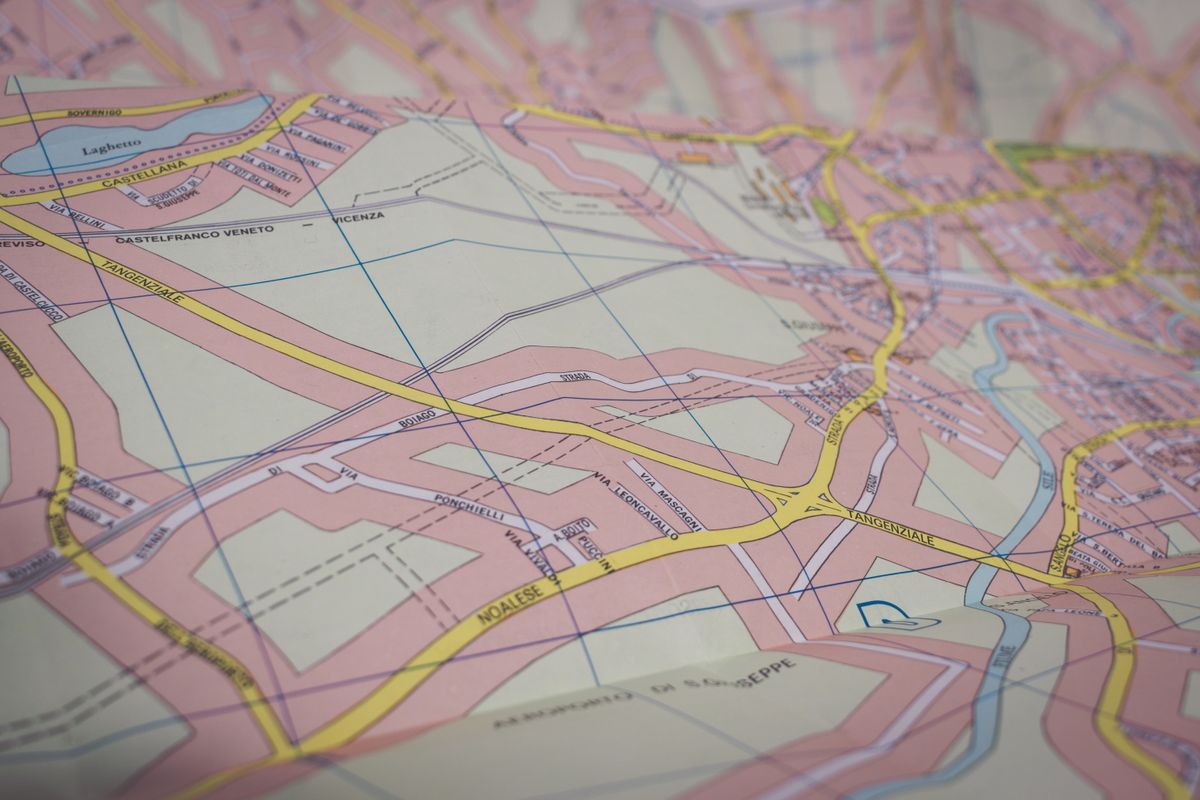
By designing continuous, thematic cultural itineraries, we transform isolated monuments into mutually reinforcing cultural destinations. A visitor exploring the Romanesque portals of Fenioux or the sculpted capitals of Talmont-sur-Gironde is guided seamlessly toward the fortified towers of Le Douhet, the ancient abbey cloisters of Fontdouce, and forgotten medieval watermills nestled along the Charente river basin.
This non-commercial circuit model benefits the entire territory. By encouraging visitors and school groups to linger in rural areas, our cultural itineraries invigorate local bakeries, family-run fruit orchards, and regional artisans without charging entrance fees or commodifying the historic landscape. Heritage serves as a shared civic commons that builds community pride and intergenerational dialogue. Every itinerary is planned in close consultation with local farmers and municipal mayors to prevent overcrowding and ensure respect for agricultural lands.

Four Active Community Heritage Projects
Each project represents a concrete, milestone-driven initiative managed by our volunteer committees in partnership with local municipalities and regional heritage authorities.
Romanesque Limestone Façade Diagnostic Survey
Systematic physical inventory across 18 rural parish sanctuaries in the central Saintonge corridor. Civic surveyor teams deploy high-precision photographic documentation, ultrasonic stone density scans, and moisture sensors to detect subterranean water infiltration. The resulting baseline records are cataloged in an open public archive accessible to municipal engineers and academic conservators.
Verified Metric: Over 1,240 sculpted stone motifs cataloged for open academic research.
Château de Le Douhet Outworks & Moat Stabilization
Collaborative stone clearance and embankment consolidation along the 17th-century bastion walls and hydraulic channels. Volunteers remove invasive root systems, re-bed fallen limestone blocks, and restore dry-stone retaining structures. This civic initiative protects the architectural perimeter while safeguarding local wetland biodiversity inhabiting the historic moats.
Verified Metric: 18 public volunteer days completed with zero commercial subcontracting.
Saintonge Junior Historian School Kits
Creation and free distribution of interactive educational modules for 24 elementary and middle schools across the Saintes, Le Douhet, and Pons districts. Modules include replica architectural tools, stone-rubbing papers, and illustrated historical guides that awaken curiosity about local medieval history and communal architecture.
Verified Metric: 100% free institutional distribution to certified public classrooms.
Pedestrian Eco-Heritage Trail Signage
Installation of non-invasive, untreated oak interpretive panels along 65 kilometers of historic pilgrimage pathways linking Saintes to rural Saintonge monuments. Panels provide historical context and flora conservation guidance, directing foot traffic away from sensitive agricultural zones while highlighting rural architectural gems.
Verified Metric: Handcrafted locally by traditional carpenters utilizing fallen Charente timber.
Democracy, Open Access, and Civic Inclusivity
At the heart of RTS ASSOC ROUTE HISTORIQUE TRESORS SAINTONGE is a profound conviction that cultural heritage belongs to the entire public. In many regions, ancient castles and architectural treasures have been locked away behind private gates or converted into luxury commercial enterprises that exclude the communities whose ancestors built them. Our association fights this commercialization of memory. Every site participating in our Route network commits to maintaining public accessibility, educational open days, and collaborative community activities.

Fostering Intergenerational Solidarity Through Stone Crafts
Preserving medieval masonry is not merely an aesthetic pursuit; it is an active transmission of ecological intelligence. Traditional Romanesque architecture relied on locally quarried limestone, natural lime mortars, and gravity-defying vaulted arches designed to endure for a millennium without petrochemical additives or industrial steel reinforcements.
When young volunteers work alongside retired master masons during our weekend field workshops, they absorb vital knowledge about sustainable construction, low-carbon building materials, and the cyclical nature of communal labor. This intergenerational bridge creates lasting civic bonds and instills respect for the shared public commons across rural villages. Volunteers learn how to identify historic mortar mixtures, how to mix slaked lime with local river sand, and how to protect porous limestone facades against the destructive crystallization of modern Portland cement.

Commitment to Non-Commercial Integrity
We firmly reject all forms of commercial advertising, corporate sponsorship of monuments for private marketing gains, and paid product promotions. Visitors to our public events are never subjected to sales pitches or commercial merchandise. Our website and publications remain 100% free of commercial tracking cookies, sponsored links, and affiliate monetization schemes. Every educational brochure, trail itinerary, and diagnostic paper is released under open civic public licensing.
Scientific Methodology: Five Pillars of Civic Heritage Inspection
To ensure rigorous preservation standards without incurring prohibitive commercial consultation expenses, RTS ASSOC ROUTE HISTORIQUE TRESORS SAINTONGE has standardized a scientific five-step protocol for community architectural monitoring. Developed in collaboration with regional university researchers and certified monument architects, this methodology enables trained civic volunteers to systematically record the health of historical structures.
Phase 1: Non-Invasive Photogrammetry & Baseline Registry
Using calibrated high-resolution digital cameras and metric survey markers, volunteer teams compile three-dimensional surface maps of Romanesque façades, tympanums, and carved corbels. By comparing millimeter-accurate photographic grids year over year, our diagnostic committee detects sub-millimeter stone shifts and structural displacement long before visible cracking endangers the monument.
Phase 2: Hygrometric & Subterranean Moisture Profiling
Capillary water rise remains the foremost threat to Saintonge limestone. Volunteers record ambient relative humidity, subterranean soil moisture levels at church foundations, and surface evaporation rates. Identifying blocked ancient drainage channels or elevated exterior grade levels enables low-cost municipal interventions, such as trench clearance, that prevent costly interior fresco deterioration.
Phase 3: Cryptogamic & Biological Colonization Analysis
Not all vegetation is harmful to historic masonry; benign lichens often protect stone from wind erosion, while deep-rooting ivy and acidic mosses fracture limestone joints. Our ecological field guidelines train volunteers to identify exact biological species before taking action, ensuring that gentle biocidal removal is applied only where structural integrity is genuinely threatened.
Phase 4: Open Public Archiving & Municipal Notification
Every field diagnostic observation is synthesized into an objective, standardized public report transmitted to the corresponding municipal mayor, the Departmental Heritage Unit (UDAP 17), and the regional DRAC services. By democratizing access to technical data, our non-profit ensures that civic authorities can prioritize scarce public preservation subsidies with complete transparency.
Frequently Asked Questions on Civic Heritage Engagement
Can individuals without architectural or historical training join volunteer field sessions?
Yes, absolutely. Our association welcomes all citizens regardless of technical background. Every conservation outing begins with an orientation briefing conducted by experienced stone conservators. Tasks are tailored to individual comfort levels, ranging from non-technical documentation, photography, and trail path clearing to specialized dry-stone walling and mortar preparation under professional supervision.
Does the association charge fees for public educational events or historical tours?
No. In accordance with our non-profit Association Loi 1901 charter and public benefit mission, our educational guided walks, school modules, and symposiums are completely free to the public. We believe that access to cultural heritage is a fundamental civic right. Modest operational costs are covered through public municipal grants and voluntary annual membership contributions.
How does the association ensure environmental preservation around historical monuments?
Historical monuments and their surrounding rural ecosystems are inextricably linked. Our teams enforce strict zero-chemical policies during all site maintenance days. We preserve natural wildlife corridors, protect bat roosting sanctuaries in medieval belfries, and install interpretive signage that encourages visitors to practice leave-no-trace ethics on rural footpaths.
How can rural municipalities request an architectural assessment for local landmarks?
Elected municipal councils and communal syndicates across Charente-Maritime can submit a formal diagnostic request directly through our secretariat in Le Douhet. Our survey committee reviews communal inquiries and schedules volunteer diagnostic visits based on structural urgency, geographic proximity to established circuits, and communal commitment to long-term public access.
Take Part in Preserving Saintonge's History
Whether you are an experienced researcher, a retired craftsperson, a student eager to learn, or a passionate local resident, your contribution matters to our collective heritage. Join our next public field assembly or reach out to our team at the Château de Le Douhet.